Many buyers behave as if sourcing in China has only two options: search online or visit Canton Fair. In reality, strong sourcing decisions come from combining channels, not relying on one.
China is too large and too specialised to be sourced properly through a single route. Online platforms are useful. Trade fairs are useful. Markets such as Yiwu are useful. Direct factory visits are useful. But each one answers a different sourcing question, and confusion starts when buyers expect one channel to do everything.
Online sourcing is best for discovery. It helps buyers identify broad supplier clusters, get early quotations, compare styling, understand MOQs, and build a first shortlist. It is fast, convenient and scalable. But it has obvious limits. Online communication can hide weak production control, vague commercial discipline, and mismatch between sales promise and factory reality.
Trade fairs serve a different purpose: they compress comparison. A fair allows buyers to see multiple suppliers in the same category over a short window. That is incredibly powerful because it improves judgment. You are no longer comparing one supplier to your imagination. You are comparing suppliers to one another. That usually leads to better questions, better negotiation, and faster recognition of who is serious.
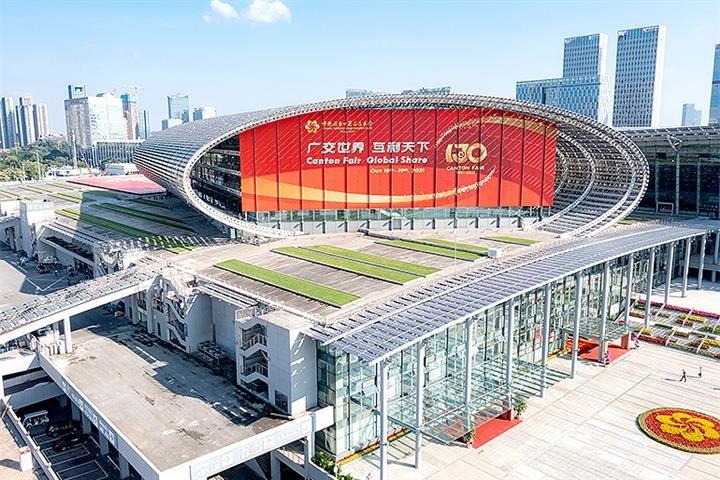
The official Canton Fair calendar itself shows why preparation matters. The 139th Canton Fair in spring 2026 is split by product group into three phases from April 15 to May 5. That means the trip only works if the buyer already knows which categories matter, which meetings must be prioritised, and what information needs to be collected on-ground. Going to a fair without category clarity is not sourcing strategy. It is event tourism.
Then there are wholesale-market ecosystems such as Yiwu. These are especially useful for assortment-heavy businesses, gifting products, seasonal goods, accessories, decor lines, small utility products, and categories where range breadth matters. Yiwu’s official online market presents one of the largest commodity-market ecosystems in the world, which is exactly why many buyers use it to understand market breadth before or alongside a visit.
Factory visits solve yet another problem: capability truth. At some point, every serious buyer needs to know whether the supplier can actually deliver the required quality, finish, packaging and scale. That is hard to judge through catalogues alone. A ground visit or third-party check can reveal whether the operation is organised, whether quality systems exist, whether export handling is routine, and whether the product shown by the sales team aligns with production reality.
This is why the strongest sourcing model is layered. Start online to build a long list. Use fairs or visits to benchmark and reduce the list. Verify legal entity details. Run sample rounds. Inspect where needed. Then move into commercial negotiation. Each layer removes a different kind of uncertainty.
Buyers who skip layers usually end up compensating with money, time or both. For example, going straight from catalogue interest to a large order can create avoidable quality problems. Going to a trade fair without a list of target suppliers can waste the best days of the trip. Relying only on a sourcing platform may produce a supplier shortlist without giving enough insight into production reliability.
There is also a deeper point here. Good sourcing is not just about finding suppliers. It is about improving decision quality. China gives buyers immense choice, and immense choice is only valuable if the process used to narrow it is disciplined. Otherwise, more options simply create more ways to make an expensive mistake.
For Indian buyers, the best use of China is not access alone. It is informed access. Know what each sourcing channel does well. Use online tools for speed, fairs for comparison, markets for breadth, factories for validation, and inspections for control. That is how professionals source. The rest is just movement without method.
India’s own trade data tells an important story. In a March 2025 reply in Parliament, the Ministry of Commerce said imports from China had risen from about USD 70 billion in 2018–19 to over USD 101 billion in 2023–24. The same reply also noted that much of what India buys from China consists of raw materials, intermediate goods and capital goods. That matters because it shows China is not only a source of finished products. It is deeply embedded in the industrial chain behind Indian manufacturing, assembly, retail and distribution.
That embedded role is one reason China remains hard to replace. It is not just a country with factories. It is a dense manufacturing ecosystem where upstream and downstream support often exist within the same broader network. Buyers can move from component sourcing to packaging discussion to accessory development to volume scaling much faster than they can in fragmented supply chains. In practical business terms, that density reduces friction.
This is where many sourcing conversations go wrong. Businesses compare countries as though they are comparing price lists. But country comparison is really supply-chain comparison. The question is not: where is the factory quote lower? The question is: where is the full chain smoother, faster, more resilient, and easier to control? A quote can be lower in one country and still produce a worse commercial outcome if it leads to longer development cycles, weaker finishing quality, inconsistent packaging, or more time lost in coordination.
Global data also supports the idea that China remains central to trade. UNCTAD’s 2025 Global Trade Update shows China still holds a leading position in world merchandise trade. In other words, while buyers across the world talk about rebalancing, the trade system itself still reflects China’s scale and relevance. This should not surprise anyone who has had to source categories with heavy supplier depth, design variation, component availability or fast reordering needs.
None of this means diversification is a bad idea. In fact, for some categories it is absolutely necessary. But smart diversification begins with category logic. If a product line depends on tooling flexibility, vendor density, multiple accessory inputs, and a fast design iteration cycle, China may still be the strongest base. If another product line is relatively standardized and can be relocated without much quality risk, then shifting part of sourcing elsewhere may make sense. That is what a mature “China plus one” strategy looks like: selective, product-led, and commercial.
The wrong way to diversify is emotional diversification. That usually starts with a decision taken before the buyer has mapped suppliers, checked landed cost, assessed defect risk, or tested whether the alternate source can actually handle scale. In such cases, the buyer has not really reduced dependence. He has simply exchanged a known system for an untested one.
Indian importers should also remember that China often wins not because it is the absolute cheapest on paper, but because it reduces hidden cost elsewhere. Better supplier response time, easier access to alternate factories, more packaging options, quicker sampling, broader input availability, and stronger production recovery when something goes wrong—all of these affect profit even when they do not appear in the first quotation sheet.
That is why the most useful sourcing mindset today is not blind dependence and not performative rejection. It is disciplined selectivity. Use China where the ecosystem gives you a measurable edge. Build alternatives where concentration risk is too high. And above all, judge sourcing bases by execution, not by trend. In importing, slogans do not protect margins. Systems do.
Visiting China or planning your first sourcing trip?
Chinese Dost helps buyers shortlist suppliers, prepare fair meetings, and turn sourcing visits into real commercial decisions.